

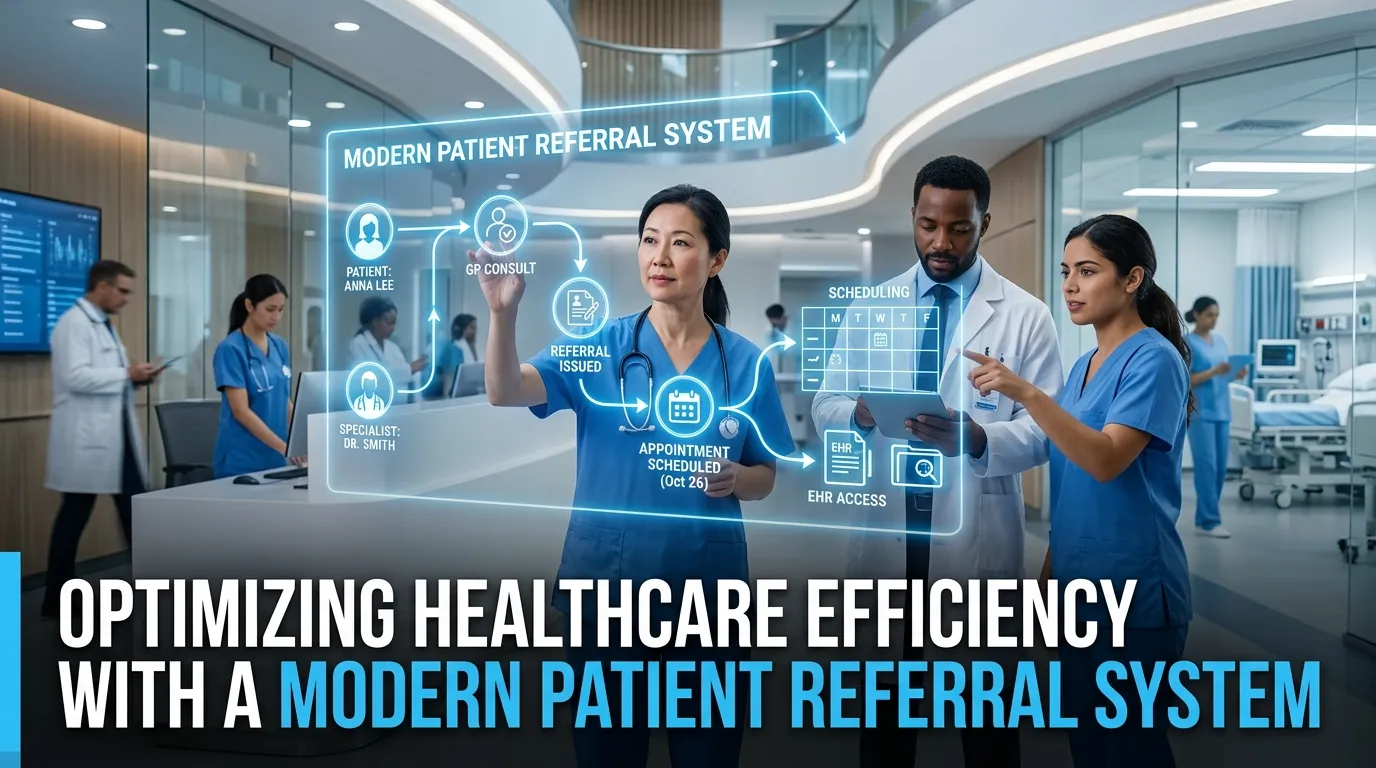
Transitioning to a digital patient referral system eliminates workflow bottlenecks, accelerates care delivery, and empowers clinics to streamline specialist transitions effortlessly while enhancing overall healthcare outcomes.
This comprehensive guide explores the structural framework and tangible benefits of modernizing referral workflows. By reading this article, healthcare leaders will learn how to plug revenue leaks, improve inter-provider communication, deploy digital tracking tools, and significantly elevate overall care quality.
The Evolution of Healthcare Coordination
Historically, managing the transition of care between primary care providers and specialists relied heavily on manual processes. Fax machines, handwritten notes, and fragmented phone calls dominated the landscape. This analog approach often led to misplaced documents, delayed diagnoses, and immense frustration for both clinical staff and those receiving care.
The introduction of the modern patient referral system changed the trajectory of medical administration. By replacing outdated paper trails with secure, interoperable digital networks, clinics can now transmit vital health information instantaneously. This shift not only accelerates the scheduling of specialized treatments but also builds a resilient framework for continuous medical monitoring.
Implementing digital architecture allows providers to track a case from the initial consultation through specialized treatment and back to primary care. This closed-loop approach ensures no one falls through the cracks, fundamentally altering how medical organizations measure success and deliver ongoing treatment.
Core Components of Modern Architecture
 To fully grasp the impact of upgrading your infrastructure, you must understand the technological pillars that make up an effective patient referral system.
Seamless Interoperability
A robust platform must communicate fluently with existing infrastructure. EHR integration strategies play a critical role here. When a patient referral system integrates directly with electronic health records, staff members avoid double data entry. This reduces administrative errors and ensures specialists have immediate access to complete medical histories, imaging reports, and lab results.
Automated Tracking and Analytics
Modern software provides real-time visibility into the status of every transition. Administrators can monitor whether a specialist received the request, if the appointment was scheduled, and whether the final consultation notes were returned. Advanced analytics dashboards highlight workflow bottlenecks, helping directors optimize staff allocation and improve response times.
Secure Communication Channels
Healthcare organizations must prioritize data security. A high-quality platform utilizes end-to-end encryption to facilitate secure messaging between different departments and external facilities. This guarantees that protected health information (PHI) remains confidential and compliant with stringent regulatory standards.
Analyzing the Financial Impact
Inefficient transition processes lead to significant financial losses. When individuals experience long wait times or poor communication, they often abandon their care plans or seek services outside of the designated network.
Preventing Network Leakage
Network leakage occurs when individuals are sent to specialists outside of an organization’s affiliated network. This results in lost revenue and disjointed care. A well-designed patient referral system mitigates this by prioritizing in-network specialists and providing immediate scheduling options. By keeping treatments within the affiliated network, hospitals maximize their healthcare revenue cycle management and ensure consistent service quality.
Reducing Administrative Overhead
Manual processing requires countless hours of administrative labor. Staff members spend valuable time making phone calls, tracking down lost faxes, and manually updating records. Automating these workflows drastically reduces administrative overhead. Clinics can reallocate staff to more strategic tasks, improving overall operational efficiency and reducing labor costs.
Comparison Table: Traditional vs. Modern Approaches
|
Feature |
Traditional Methods |
Modern Digital System |
|---|---|---|
|
Data Transfer |
Fax, phone, paper forms |
Encrypted digital exchange |
|
Tracking |
Manual spreadsheets |
Real-time automated dashboards |
|
Processing Time |
Days to weeks |
Minutes to hours |
|
Network Leakage |
High (difficult to control) |
Low (system-enforced routing) |
|
Data Accuracy |
Prone to human error |
High (EHR auto-population) |
Enhancing the Care Experience
 Efficiency metrics and financial gains are essential, but the ultimate goal of any medical technology is to improve human outcomes. A modernized patient referral system significantly enhances the experience for those seeking treatment.
Minimizing Wait Times
Prolonged wait times for specialists can exacerbate medical conditions and cause unnecessary anxiety. Digital platforms automate the triage process, allowing urgent cases to be flagged and expedited. Immediate electronic transmission means specialists can review cases and accept appointments much faster than before.
Transparent Communication
Uncertainty is a major source of frustration during medical transitions. When utilizing a modern patient referral system, individuals receive automated updates regarding their appointment status via text or email. This proactive communication fosters trust and encourages individuals to take an active role in their patient retention strategies and health journey.
Pro Tips and Expert Operational Insights
Industry leaders consistently emphasize that technology deployment requires meticulous change management. Based on insights from leading workflow optimization consultants and healthcare operations directors, consider these high-level strategies:
- Map Your Workflows First: Before activating any software, painstakingly map out your current administrative workflows. Identify exact failure points and design the patient referral system configurations to specifically address those distinct vulnerabilities.
- Establish a Digital Directory Governance Policy: Your routing is only as good as your data. Assign a dedicated staff member to routinely audit and update the digital provider directory to ensure all specialist addresses, fax numbers, and digital endpoints remain highly accurate.
- Leverage Predictive Analytics: Utilize the reporting modules within your patient referral system to predict seasonal fluctuations in specialty demand, allowing your organization to proactively allocate staffing resources.
- Champion Clinical Buy-In: Ensure that lead physicians visibly endorse the technology. When clinical leaders actively utilize the patient referral system, administrative and nursing staff are significantly more likely to adopt the platform with enthusiasm.
Common Mistakes to Avoid During Implementation
Even with cutting-edge technology, implementation failures can severely hinder your clinic’s success and squander your financial investment. Avoid these frequent, costly missteps:
-
- Failing to Train the Entire Interdisciplinary Team: Providing comprehensive training exclusively to IT staff or department heads leaves daily administrative users struggling. Role-specific, hands-on training is mandatory for all personnel who will interact with the patient referral system.
- Ignoring Closed-Loop Communication Workflows: Sending the initial request is merely step one. A true patient referral system implementation must vigorously track the return of clinical notes after the visit. Failing to monitor this return loop entirely negates the value of the platform.
- Neglecting Patient Engagement Features: If you do not actively utilize the system’s automated outreach features, patients may forget to schedule their specialty appointments, leading to a surge in preventable no-shows.
- Over-Customizing the Platform: While customization is valuable, excessive modifications can delay deployment and complicate future software updates. Stick to proven, standardized workflows provided by the vendor whenever possible.
Maximizing Financial Health with Revenue Cycle Managementrevenue cycle management
The operational benefits of a streamlined transition process extend far beyond clinical care; they directly impact the financial vitality of the healthcare organization. By integrating your communication tools with robust revenue cycle management protocols, clinics can drastically reduce administrative waste and accelerate reimbursement cycles.
When a patient referral system effectively prevents network leakage, it actively retains billable encounters within the organization’s financial ecosystem. Furthermore, the automated capture of prior authorizations and precise documentation routing ensures that billing departments have immediate access to the requisite data needed to submit clean, incontestable claims. Optimizing revenue cycle management through these digital pathways means fewer denied claims, faster turnaround times from insurance payers, and a significant reduction in the labor costs previously associated with manual claims appeals and retro-authorizations.
Expert Insights: Building a Connected Ecosystem
Industry leaders emphasize that technology alone cannot solve operational inefficiencies. According to guidelines from healthcare policy institutes, successful modernization requires a cultural shift within the organization.
“The most effective deployments happen when clinical directors view the patient referral system not just as a scheduling tool, but as a comprehensive care coordination engine,” notes digital health infrastructure experts.
Organizations must establish clear protocols for how data is shared and acted upon. Interdepartmental communication protocols should be updated to reflect the capabilities of the new software. When primary care physicians and specialists collaborate through a shared digital workspace, diagnostic accuracy improves, and redundant testing is eliminated.
Security and Regulatory Compliance
 Handling medical data requires strict adherence to privacy laws like HIPAA. A trustworthy patient referral system incorporates multiple layers of security to protect sensitive information.
Access Controls and Audit Trails
Administrators must configure role-based access controls to ensure staff members only view data necessary for their specific duties. Furthermore, the software must maintain detailed audit trails. These logs track who accessed specific files, when they were opened, and what changes were made, providing essential documentation for compliance audits.
Secure Cloud Infrastructure
Legacy on-premise servers are increasingly vulnerable to cyber threats. Modern solutions leverage secure cloud environments that offer automated backups, advanced threat detection, and disaster recovery capabilities. This ensures continuous operation even during unexpected technical disruptions.
Measuring Success and Continuous Improvement
Deploying the software is only the first step. Healthcare directors must continuously monitor key performance indicators (KPIs) to measure the return on investment.
Essential metrics to track include:
- Referral Completion Rate: The percentage of recommended specialized visits that are actually completed.
- Average Processing Time: The duration between the initial primary care recommendation and the specialist consultation.
- In-Network Retention: The volume of cases successfully routed to affiliated providers versus external competitors.
- Provider Satisfaction Scores: Feedback from clinical staff regarding the ease of use and reliability of the platform.
Regularly reviewing these metrics allows administrators to identify remaining bottlenecks and adjust workflows accordingly. A patient referral system is a dynamic tool that should evolve alongside the organization’s needs.
Future Trends in Care Coordination
As healthcare technology continues to advance at an unprecedented pace, the capabilities of the standard patient referral system will expand exponentially. The integration of artificial intelligence and machine learning algorithms will soon enable predictive routing, wherein the software analyzes historical clinical outcome data to recommend the specific specialist statistically most likely to achieve a positive health outcome for a specific patient demographic.
Additionally, we will see deeper integrations with wearable health technology and remote patient monitoring devices. A future-proof patient referral system will have the capacity to ingest real-time biometric data, automatically triggering an emergency specialty consultation if a patient’s vital signs cross a critical, pre-defined threshold. Investing in a scalable, cloud-based platform today ensures that your healthcare organization remains agile and fully prepared to adopt these transformative technologies as they become commercially viable.
Conclusion
A meticulously implemented, deeply integrated patient referral system is a foundational tool for achieving operational excellence in the modern healthcare environment. By actively eliminating manual administrative tasks, prioritizing deep data interoperability, and stringently avoiding common implementation mistakes, your medical practice can significantly reduce costly network leakage while simultaneously elevating the quality of care. Take decisive action today by thoroughly evaluating your current inter-provider workflows and strategically investing in a comprehensive, automated solution that drives both sustained clinical success and long-term financial viability.
Frequently Asked Questions
1. What is a digital patient referral system?
A digital platform designed to automate and manage the transition of care between healthcare providers. It replaces manual processes like faxing with secure, electronic data exchange, ensuring specialists receive accurate medical histories instantly.
2. How does this technology improve data security?
It utilizes encrypted messaging, secure cloud hosting, and role-based access controls to protect sensitive health information. This ensures strict compliance with HIPAA and other healthcare privacy regulations.
3. Will this software integrate with our existing EHR?
Yes, high-quality platforms are built with interoperability in mind. They use standard protocols like HL7 and FHIR to integrate seamlessly with major electronic health record databases, preventing duplicate data entry.
4. How does the system reduce network leakage?
By providing administrators and physicians with a clear, accessible directory of affiliated in-network specialists. The software can be configured to prioritize these affiliated providers during the scheduling process.
5. What are the main benefits for clinical staff?
It drastically reduces administrative burden. Staff spend less time on phone calls and tracking down paperwork, allowing them to focus more energy on direct clinical support and operational strategy.
6. Can patients track their own appointments through this software?
Many modern platforms include secure portals or automated notification features (via SMS or email) that keep individuals informed about their appointment status, directions, and preparation instructions.
7. How long does implementation typically take?
Deployment timelines vary based on the size of the organization and the complexity of existing databases. However, most mid-sized clinics can fully deploy and train staff on a new platform within a few weeks to a couple of months.
8. What metrics should we track to measure success?
Key performance indicators include referral completion rates, average time from request to appointment, reduction in out-of-network leakage, and overall staff satisfaction scores.
9. How does this improve overall care quality?
It facilitates a “closed-loop” process. Primary care physicians receive consultation notes back from specialists much faster, allowing for rapid adjustments to treatment plans and preventing individuals from falling through the cracks.
10. Are these platforms scalable for growing practices?
Absolutely. Cloud-based architecture allows these platforms to scale effortlessly. As your practice adds new providers, locations, or affiliated specialists, the software easily accommodates increased data volume and user accounts.
